
Faith While Trembling: Processing in the Bomb Shelter

If I were to name the spirit of our current age, I might call it "The Fearful Generation".

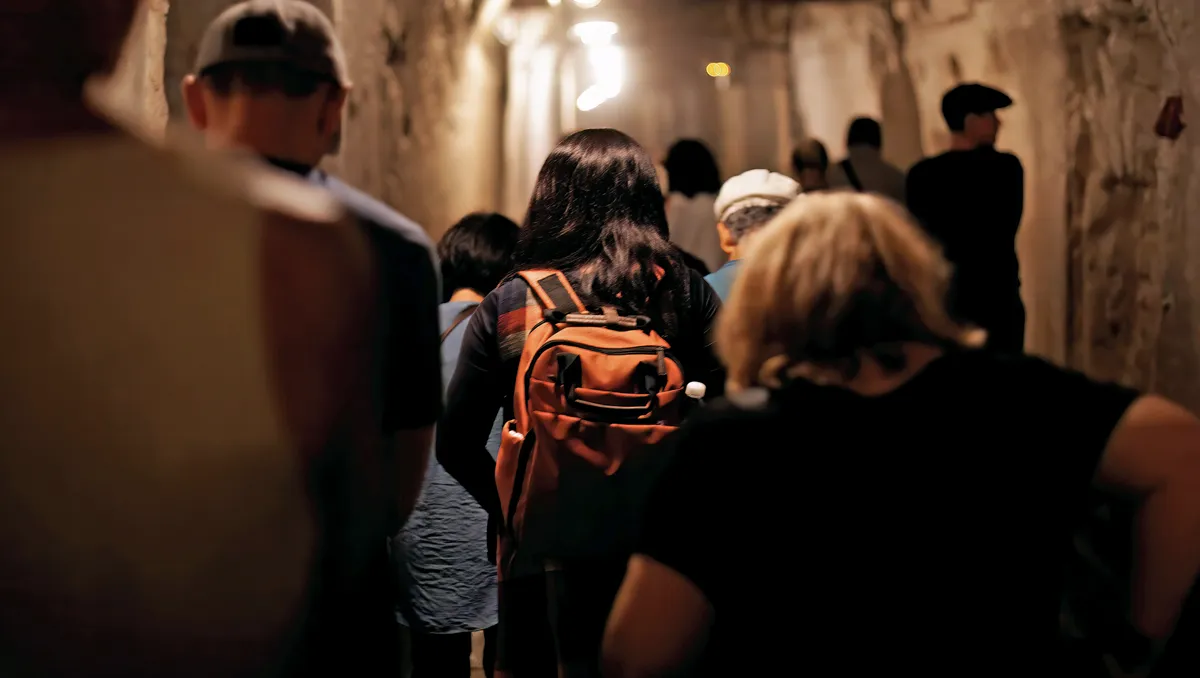
Ninety seconds is not a lot of time to think.
When the missile siren sounds in Jerusalem, that is roughly how long you have to get to safety. Phones begin blaring with alerts from Home Front Command. Families scramble into stairwells and safe rooms. Dogs bark. Children run. Doors slam shut.
Within minutes, you may hear explosions overhead as missiles are intercepted, or feel the shockwave of the blasts as they land somewhere nearby or farther away.
It is in those moments that fear feels very real. Visceral. Tangible.
Inside the Bomb Shelter
Recently, I was listening to one of my favorite podcasts, and the hosts were discussing the names given to the various generations from the mid-1800s until today. I’m often labeled an older Millennial, or sometimes even a Xennial, because I remember life before the internet in our homes, before cell phones of any kind, and before the 24-hour news cycle.
Because of that, I tend to think of the world in a sort of pre- vs. post-9/11 dichotomy. A world that once felt like it was expanding into a global community now often feels filled with fear, disillusionment, and a return to nationalism.
If I were to name the spirit of our current age, I might call it The Fearful Generation.
I’ve lived in Israel for the last twenty years and have felt the weight of more than two years of war. Even as I write this, my back muscles are still sore from the post-Iran war jitters. Like most Israelis, my family spent much of March running in and out of a bomb shelter. Our phones would suddenly resound with that Home Front Command alert, warning us of a possible missile attack in our area. The siren would sound, giving our family 90 seconds to run.
For a moment, our hearts would stop and our breathing would become shallow while the dog panted and trembled beside us.
My wife, our children, and I would rush to the safe room, our golden retriever scrambling behind us. We’d slam closed the heavy metal shutter and the bank-vault-like door, and we’d wait. Sometimes we would hear missiles intercepted overhead. Sometimes we would hear explosions nearby. Either way, for a moment, our hearts would stop and our breathing would become shallow while the dog panted and trembled beside us.
As frightening as it is to be huddled together on a mattress in a bomb shelter, the most terrifying moments are when the family is separated during an attack. Perhaps our son is still at the soccer court down the street, or my wife is out walking the dog. Once the safe room door is closed, the internet connection becomes spotty. (In fact, many public shelters have no connection at all.) There’s often no way to know if someone you love is safe unless they’re huddled beside you.
Minutes pass with no response on the family chat, and dark thoughts begin to drift through your mind. Is our daughter safe? Is she hurt and crying out for us? Is she gone?
Statistically, you know your family is probably fine. But statistics don’t do much to ease the fear when all-too-real explosions are shaking your neighborhood, your home, your very bones. In one blast, my son’s teacher lost her car. In another, a giant piece of missile shrapnel landed down the street. The boom you just heard may have changed your life forever.
Coping Together
When explosions surround you day and night, the rational part of your brain begins to lose its grip. Your deepest fears suddenly feel far more plausible. Losing a child, a spouse, a friend, or a future together on this earth stops feeling theoretical.
If I’m being honest, over the past month I’ve had moments of intense fear—sometimes even shaking uncontrollably. But I’ve also had many conversations with friends about it. After the initial exchange of “You’re okay? I’m okay. We’re still alive,” the conversation quickly turns to deeper questions: “Do you have a safe room in your apartment? How are you holding up? What are you doing to cope?”
At our Passover Seder this year, one friend told me that this conflict with Iran felt different from last year’s twelve-day war. Recently he had come to believe in God, and because of that, he felt more hope than before. He now finds himself sharing with his family how his faith has given him a different outlook on the world around him.
Perhaps the storm feels less powerful when we face it together, with one another and with God.
Another friend mentioned the serenity he had discovered in the midst of the storm because of his faith. Still another told me, somewhat humorously, that he had been dealing with anxiety long before the war but felt calmer now that everyone else seemed to be in panic mode as well. Perhaps the storm feels less powerful when we face it together, with one another and with God.
On the flip side, one gentleman living 6,000 miles away recently emailed me a reminder that “God has not given us a spirit of fear.” I know the verse well as a Jewish believer in Jesus. I believe it. But the way it was interpreted made it sound as if fear itself were a failure of faith. Admittedly, I don’t know if this man has ever lived through war. It’s easier to admonish fear when you’re not hearing explosions outside your window.
Still, his message made me pause. Is fear itself the problem? Or is it what we do with fear that matters most? So, I did what any good Jewish boy would do. I opened the Hebrew Scriptures to see what they had to say.

Dealing with the Reality of Fear
Do you know what I found? The Bible does not pretend fear isn’t real. It doesn’t sweep it under the rug. Even King David experienced fear. At one point he cries out, “Fear and trembling come upon me, and horror overwhelms me.”
I am far from the giant-slaying, mighty warrior that David was, but I take comfort in knowing that even he trembled when facing the dangers of this world. When you continue reading David’s psalms, you notice something remarkable: he is quick to redirect that fear back toward trust in God.
In the very next psalm he writes, “When I am afraid, I put my trust in you. In God, whose word I praise—in God I trust and am not afraid. What can mere mortals do to me?”
In Psalm 23, perhaps his most famous, David describes the most terrifying of settings. Still, he puts his hope in Adonai: “Even though I walk through the valley of the shadow of death, I will fear no evil, for you are with me; your rod and your staff, they comfort me” (v. 4).
Like many of my friends, David practices turning his fear into faith. To be clear: faith is not believing bad things cannot happen. It is trusting God even when they do. Faith is trusting that his presence will never leave us, regardless of what comes our way.
Standing in the Storm
I’ve always loved the way Rembrandt plays with light and darkness in his paintings. One of my favorite works is The Storm on the Sea of Galilee, inspired by the account in Mark, Luke, and Matthew in which a violent storm overtakes the disciples’ boat in northern Israel.
In the painting, the disciples struggle desperately with the sails and waves while the boat tilts aggressively in the wind. Some cling to ropes. Others look frozen in terror. Jesus sits farther back in the boat, almost hidden in shadow.
What fascinates me most is how Rembrandt painted himself into the scene. He stands there among the disciples, caught in the middle of the storm, looking directly at the viewer.
In a sense, Rembrandt stands exactly where we often find ourselves: trapped between fear and faith, witnessing a storm that has not yet been calmed. But the viewer knows something the disciples do not yet know. They are in a boat with the very one who, I believe, made that sea. And he calms the chaos with divine authority.
Sometimes the storm continues to rage, and we are invited to discover his presence within it.
In my own life, I have discovered that sometimes God intercedes and eases the storm. At other times, the storm continues to rage, and we are invited to discover his presence within it.
The fear we experience is real. Sometimes the storm is war or economic instability. Sometimes it is social unrest, interpersonal conflict, or the uncertainty of whether we will have enough money for the week ahead.
Whatever storm we face, faith is often practiced while trembling. It is the decision to do what David did: to call out to God and ask him to walk with us through the storm.
Our generation may indeed be marked by fear. We live in an age of nonstop digital connection, endless news cycles, and global uncertainty. But the Scriptures remind us that fear has always been part of the human story, even for the generations that came before. Even kings and prophets trembled.
What matters is not whether fear exists, but where we turn when it does.
As the Sons of Korah wrote in Psalm 46: “God is our refuge and strength, a very present help in trouble. Therefore we will not fear though the earth give way, though the mountains be moved into the heart of the sea, though its waters roar and foam, though the mountains tremble at its swelling” (vv. 1–3).
The alarms may sound, the missiles may fall, and the storms of life may still rage on. But we don’t face them alone.

Introducing the Inherit Podcast
Join us for deeper conversations and behind-the-scenes insights into the articles and authors shaping Inherit.

Endnotes
- 2 Timothy 1:7
- Psalm 55:5
- Psalm 56:3–4
- Matthew 8:23–27, Mark 4:35–41, Luke 8:22–25
Meet The Editor


