
My Secret Heritage Led Me to Faith

I thought I knew who I was, but within a few short months, global events, campus tensions, and unexpected relationships forced me to confront a heritage I had long overlooked.

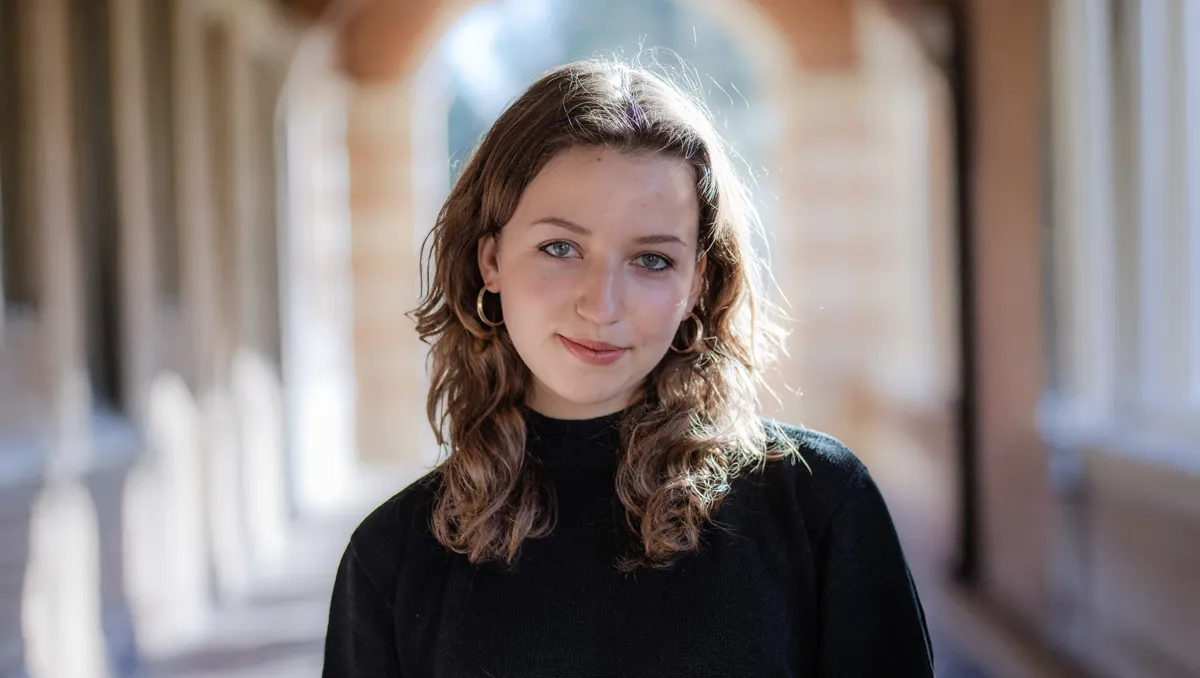
I didn’t come to UCLA expecting to rediscover my Jewish identity. If anything, I assumed it would remain what it had always been—an unspoken footnote in my family’s history. I thought I knew who I was, but within a few short months, global events, campus tensions, and unexpected relationships forced me to confront a heritage I had long overlooked.
What began as a search for clarity about world events became a journey into my own past, one that ultimately reshaped my sense of community, belonging, and even faith. And it changed me in ways I could never have anticipated.
A Generational Story of Assimilation
I was born in Chișinău, Moldova, to an ethnically Jewish mother and a Gentile father. My mother’s mother survived the horrors of World War II. Shortly thereafter, she converted to Eastern Orthodoxy to avoid ongoing antisemitism.
She raised my mother in the Eastern Orthodox Church, and my parents carried that tradition on with me. The services were in Greek and Russian, languages I couldn’t understand. I listened to prayers I couldn’t follow to a God I didn’t know.
I always knew my mom was Jewish, though it was something that lingered quietly in the background of our lives. There were hints—our house smelling of freshly baked challah on weekends, the red kabbalah bracelet that had encircled my wrist since birth.
But being Jewish wasn’t something we talked about, much less lived out. It felt more like a secret folded into our family’s story than a truth we embraced. With my heritage neatly tucked away, my primary identity formed around agnosticism.
That is, until I was forced to face my Jewish identity head-on.
Wrestling with Jewish History for the First Time
Like they did for so many others, the events of October 7, 2023, changed how I thought about myself, the world, and Jewish life. But while many Jews deepened their faith or their ties to the Jewish community, I essentially discovered mine.
When Hamas kidnapped and killed over a thousand Israelis, many Americans—myself included—initially struggled to respond or even name it for what it was. But as the war unfolded and people began finding their words, the reactions became extreme. I began seeing a growing disconnect between the brutality of what happened and the way it was being represented in the media. Seeing students waving Palestinian flags or even Hamas symbols on US campuses made me feel like I was missing an essential part of the story. That’s when I realized I needed to dig into my own history and start thinking critically for myself.
That’s when I realized I needed to dig into my own history and start thinking critically for myself.
That week, I finally sat down with a blank document and began piecing together a history I had ignored. I thought my research on Israel and Palestine would confirm the world’s anger toward Israel. Instead, I found the opposite. What struck me most was how often media coverage fixated on the outcomes of Israel’s actions while stripping away the context that led to them.
For example, I found that in 1948, only three years after Jews had lost nearly two-thirds of our population in the Holocaust (and just one day after Israel declared independence), five Arab nations invaded the fledgling state. The deeper I dug, the more I was struck by the fact that against all odds, Israel survived—even after the Arab League issued the infamous Khartoum Resolution: “No peace with Israel, no negotiation with Israel, no recognition of Israel.”
What I put on that blank page (and many more pages) revealed a story that put the black-and-white narratives I had heard to shame. My ancestors’ story of survival was filled with shades and hues, complexities and pain, survival and victory. The more I looked, the more I saw myself in the story.

Getting Involved in Jewish Life and Traditions
A few months later, I met and started dating a Jewish man on campus. During the early days of our relationship, I mentioned to him that my mother was Jewish. He told me that because Jewish law dictates that heritage is traced matrilineally, I was as Jewish as someone born to two Jewish parents. This information took me by surprise.
It was important to him, even as a Reform Jew, to date someone who was Jewish and familiar with Jewish customs. One night over dinner, he insisted that I join him for Shabbat. “This is a group of people you want to connect with,” he told me.
At first, I was skeptical. Was this truly something I wanted, or was I only pursuing it because of the relationship? I feared that I wasn’t worthy of calling myself Jewish alongside people who had carried that identity their entire lives.
In the end, I swallowed my fears and went. That Friday night at Chabad, the room was alive: hundreds of students gathered around long tables, passing challah and pouring wine. What struck me most wasn’t the noise or the size of it all, but the warmth. I had never seen a community at UCLA quite like this, and in that moment, despite knowing so little of my own people or traditions, I felt at home.
I feared that I wasn’t worthy of calling myself Jewish alongside people who had carried that identity their entire lives.
The Impact of Jewish Community
Opportunities followed quickly after that one dinner. I was asked to cover the campus encampment for my newspaper. I drafted an op-ed on Mahmoud Khalil at my internship. I joined research connected to UCLA’s Nazarian Center. Even small things began to pop up, like being asked to recite Hebrew prayers on Shabbat dinners or attend Rosh Hashanah services at the local synagogue. It felt like each opportunity that came my way was deepening my connection to the Jewish community and binding me tightly to my Jewish identity.
At the beginning of 2025, my boyfriend and I had the opportunity to spend ten days in Israel. The country was at war, yet the streets throbbed with life. In Jerusalem, a man selling kippahs pressed a free clip into my partner’s hand when he realized we had no shekels. In Tel Aviv, a dosa vendor finished our meal with steaming cups of chai, refusing to take extra pay. Everywhere, people were quick to laugh, quick to give, generous without limit.
One night in Jerusalem, I was shaken awake at 4 a.m. by rocket sirens blaring through our hotel room. The Houthis had struck again. Groggy and afraid, we stumbled toward the bomb shelter. The IDF soldiers traveling with us met our panic with easy smiles, assuring us we were safe.
Every moment of that trip chipped away at the image I had inherited from the news and validated my research. What I found was a country and a people more complicated, more generous, and more self-questioning than I had ever been led to believe—even in the midst of war and hate.
“When Jews are targeted, we only grow closer,” someone on the trip told me. I understood then that Jewishness wasn’t something I could keep at arm’s length. It was blood, history, stubborn survival—something that was indestructible. And I was part of it.
How Being Jewish Led Me Back to Yeshua
My journey didn’t end when I arrived home in California. When looking for a nearby coffee shop to study, I met several other Jewish students. We chatted about books, school, coffee, and faith. They shared that they were both Jewish and Christian.
My childhood was marked by both of these religions, but I never believed in either—and never saw how they connected. But here these new friends were, fully embracing and embodying both their Jewish identity and faith in Yeshua.
I had rediscovered my Jewish heritage, but now it felt time to take a fresh look at faith too. As I began to read the Bible, reading both “Old” and “New” Testaments, the pieces started to connect and the lines began to blur. The parts I thought were distinctly Christian were actually Jewish. Prophecies in one were getting fulfilled in the other.
The more I read, the more it resonated with me—intellectually and spiritually. I began to notice little things in my life that weren’t coincidences, small miracles that felt like God was saying, “I’m here, Alina. You’re on the right track.” I started to wonder: Could I be both?
The more I read, the more it resonated with me—intellectually and spiritually.
I have discovered that it is possible, but it’s by no means simple. I still wrestle with thoughts and questions: Am I somehow less Jewish now that I believe in Yeshua? If I was Jewish while I was agnostic, I certainly can’t be less Jewish as a Messianic. How do I explain myself to my Jewish friends? As someone who has moved from nominal Christianity to agnosticism and back to faith, I understand how alienating testimonies of miracles and Scripture can sound.
One truth steadies me: my Jewishness can’t be erased—not by my grandmother’s forced assimilation nor by my own genuine faith. It’s who God made me to be. And in a strange twist, it was reclaiming that Jewish identity that led me back to Yeshua in the most authentic way. Without it, I might never have opened the Tanakh with fresh eyes, never traced the thread from Genesis to the gospels, never experienced the fullness of who I could be.
Now, every time I open the Scriptures and see a prophecy confirmed, every time I wake up and experience a promise fulfilled, I am reminded of why I believe. I see the thread weaving through history and into my life today. My journey isn’t over yet; I keep learning, keep questioning, and keep standing in awe of the God who weaves it all together.

Introducing the Inherit Podcast
Join us for deeper conversations and behind-the-scenes insights into the articles and authors shaping Inherit.

Endnotes
Meet The Editor


